What a Copper Countertop Taught Me About AI and Human Judgment
Summary & Key Takeaways
- AI can explain a problem. It can’t see one. Confidence and accuracy are not the same thing.
- Human Judgment comes from watching results unfold and adjusting. That is still a human asset, built one experience at a time
- AI is at its best as a capable co-pilot. Research, options, drafts, and thinking out loud are where it earns its keep.
- Know which decisions need lived experience before you hand them off. That line is different for every team, and it’s worth drawing on purpose.
Patina-Gate
Last winter in Santa Fe, I had a copper bathroom counter with ten years of beautiful dark brown patina on it. One day I noticed a couple of ring marks from a can. A little dish soap, a scrub sponge, and about thirty seconds later, a bright pink spot of raw copper was staring back at me.
So I tried to fix it. Vinegar. Salt. More soap. Every attempt spread the damage a little further across the surface.
Eventually I turned to AI for help, and in fairness, it was genuinely useful in places. It explained the chemistry behind patina. It pointed me toward the right kind of product. It even helped me find a local supply shop that worked with the metalsmiths and artisans in town.
But it also misread the product instructions and pushed a step that worked directly against what I was trying to do. At one point, it suggested a diluted vinegar mix. Vinegar. The very thing that started the spread. I caught both, and in the end it took a specialty product, a Q-tip, natural light, and my own eyes to bring that counter back.
In our house, it’s now known as Patina-gate.
And Then There’s My Hair
In the spirit of full disclosure, I am a card-carrying member of the secret at-home hair dye generation. Yes, the youthful glow you all assumed was natural has a product number.
This week I asked AI why my whites were coming out brassy. It answered with total confidence. It was also wrong, and I had to correct it. A seasoned colorist would have looked at my roots and known the answer in about four seconds.
Two very different rooms. Same lesson.
What AI Got Right
I want to be fair here, because I use AI every day and I’m genuinely excited about what it can do.
It’s fast. It’s tireless. It can pull together options in minutes that would have taken me an afternoon. It’s a great thinking partner when I’m working through a decision, and a strong first-draft writer when I know what I want to say. In Patina-gate, it found me the right product and the right shop. That mattered.
Where It Falls Short
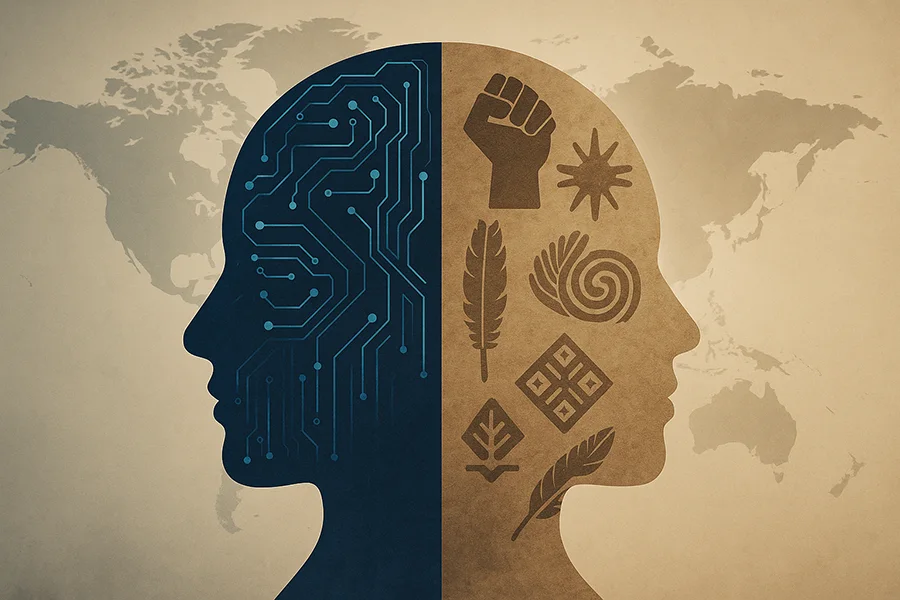
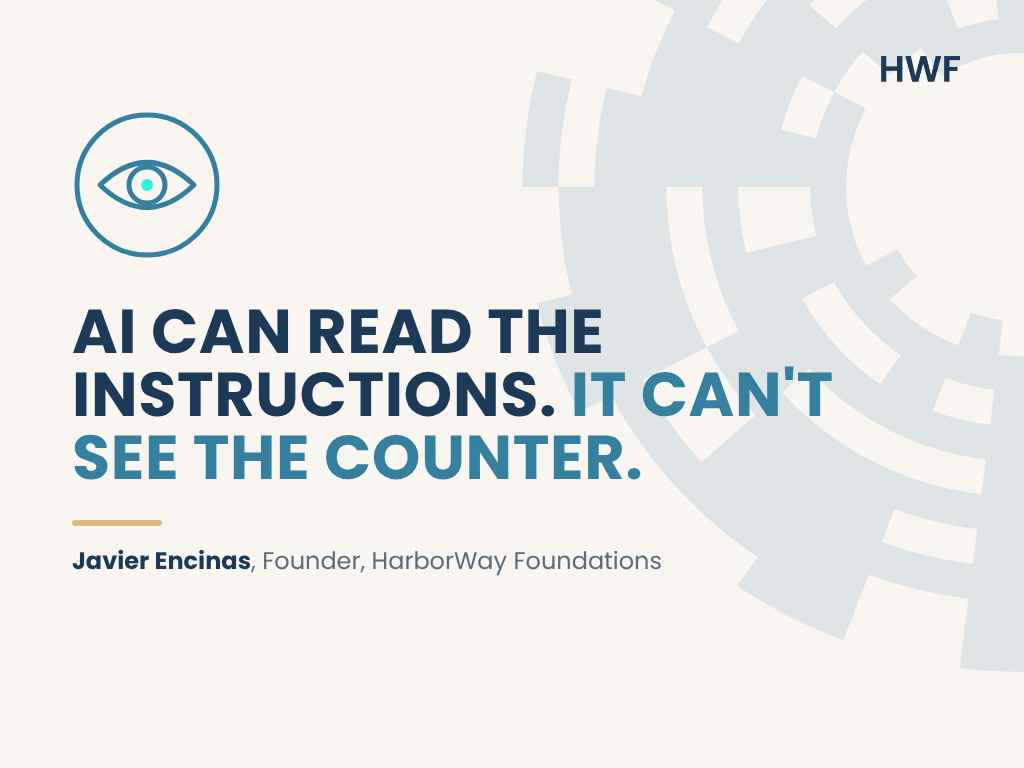
Here’s the gap. AI has never stood over a copper counter and watched a chemical darken it in real time. It has never seen color process on a gray strand of hair and thought, that’s not right, pull it now. It has read about those things. It has never done them, failed at them, and adjusted.
That’s what experience is. It’s a feedback loop between what you expected and what actually happened, repeated over years until it becomes instinct. A seasoned colorist, a metalsmith, a leader who has sat through a hundred board meetings: that instinct is what you’re really paying for.
Sometimes today’s AI feels a little like handing a toddler the controls of a fighter jet. Not because it isn’t impressive. Because the distance between knowing about something and knowing how to do it is enormous, and right now, humans still own that distance.
Why This Matters for Mission-Driven Leaders
Whether you lead a nonprofit, a social enterprise, or a purpose-driven company, your team is probably somewhere in the middle of figuring out AI. It’s drafting proposals, investor updates, customer emails, impact reports, and social posts, and much of that is a smart use of a powerful tool.
The risk isn’t the tool. The risk is quietly handing it decisions that need lived experience. How to approach a funder or investor who’s losing confidence. How to read a leadership team or board that’s split. How to rebuild trust with customers, partners, or a community after something went wrong. AI can help you prepare for those moments. It can’t stand in the room for you.
My colleague Liz Burkhardt wrote about designing the working world of tomorrow with AI, and how unstructured adoption quietly shifts the burden onto your managers. The answer isn’t checking every output. It’s being deliberate about what AI should own and what your people should. This piece is the human side of that same conversation.
The Pilot Still Matters
The organizations that get the most out of AI won’t be the ones that use it for everything. They’ll be the ones that know exactly where it helps and exactly where a human needs to make the call.
My counter is fine now. My roots are a work in progress. And I’ve learned to treat AI the way I’d treat a brilliant new hire in their first week: grateful for the help, impressed by the speed, and very clear about which calls are still mine to make.
If you’re wondering where your own organization stands, our free HWF Pulse Check gives you a quick read in about two minutes.
So I’ll ask you: where has AI saved your team real time, and where did you learn the hard way that a human needed to make the call?