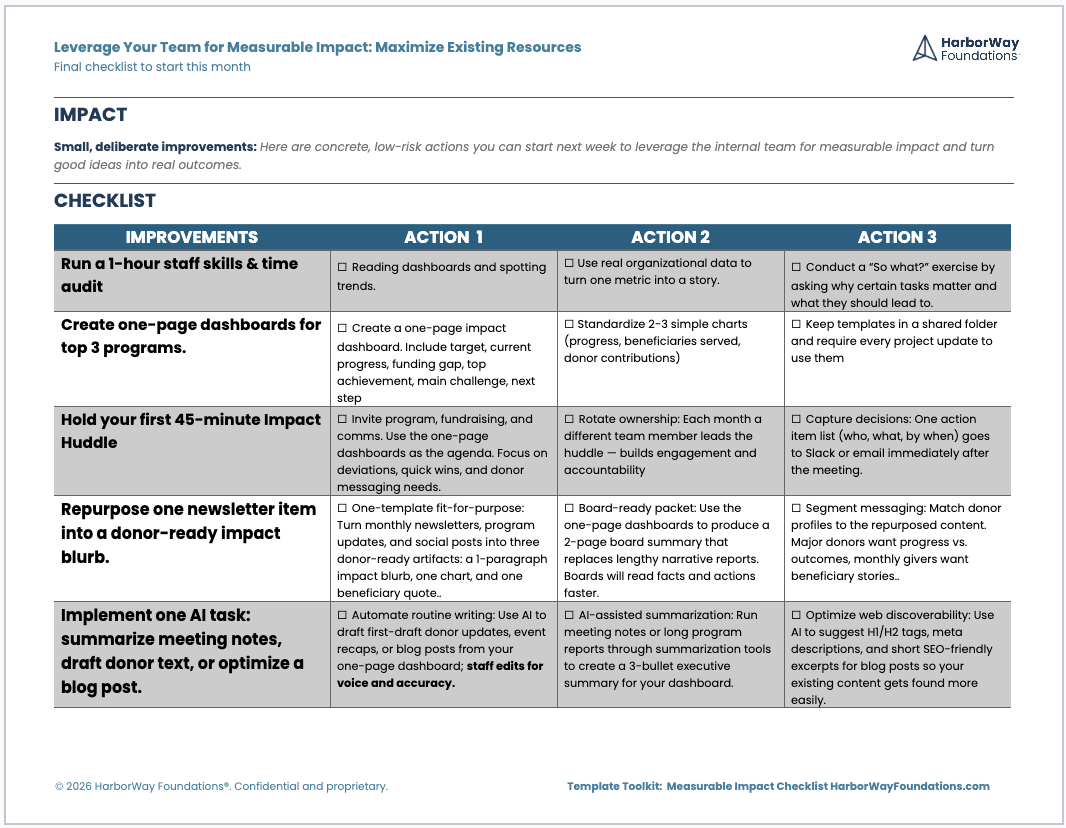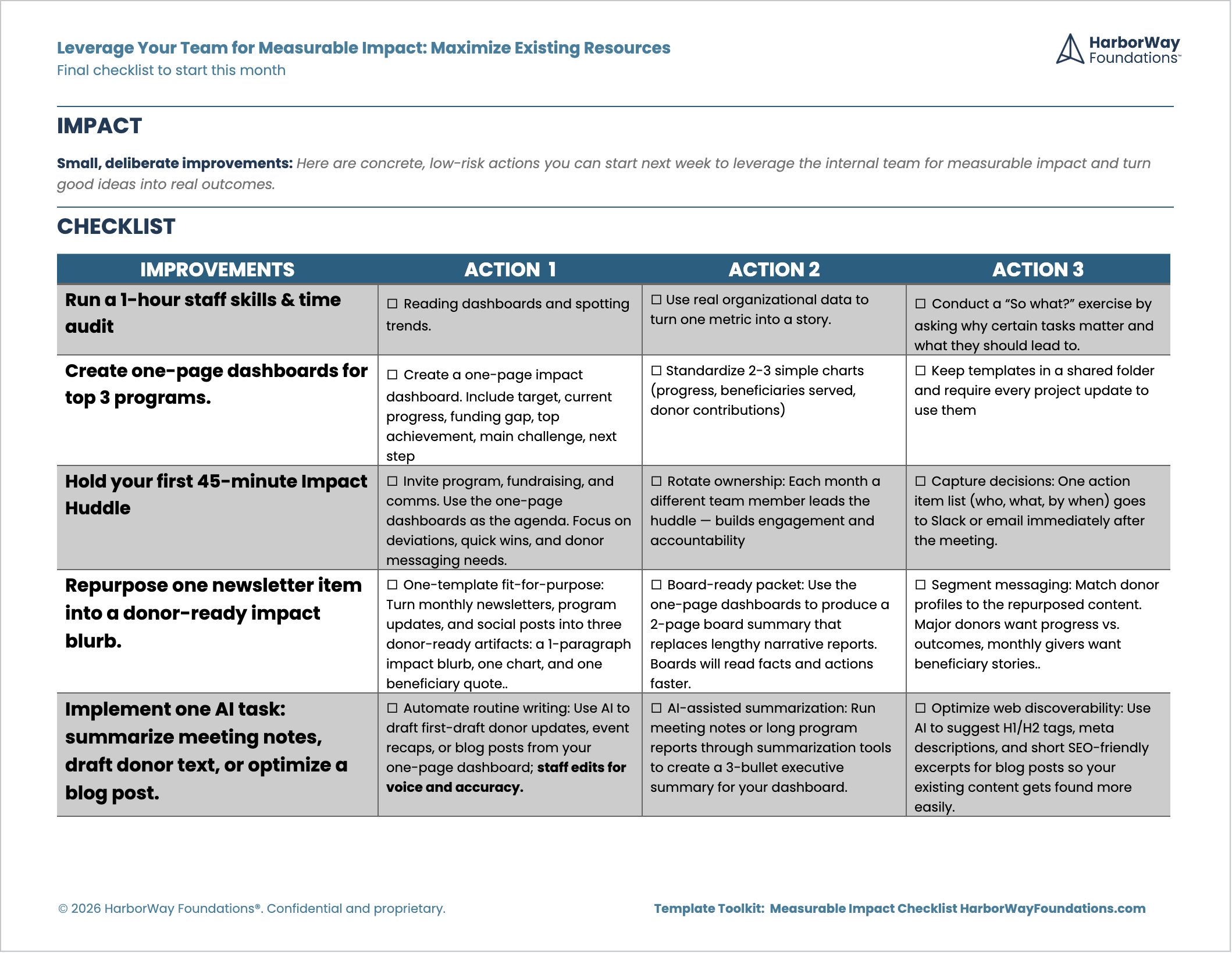
Getting workflows right (and maintaining them over time) makes a huge difference in making the most of every tool and resource available to your team, including AI. A recent Harvard Business Review article describes the current state of AI use, productivity expectations, and professional life. The recommended actions are practical. The gap is in actually doing them, not just talking about them.
Coordinating how your team uses AI is the most effective first step to leveling up without overloading. Here’s how AI can make your team and your work better.
Build the Workflow Habit, Not Just the Tool
AI is a step in the work, not the final product. A few practices that make the difference:
- Schedule reflection steps. The work is now editing and judgment. Take time to check whether the output aligns with the original ask, is accurate, and isn’t just regurgitated content.
- Sequence the work. Know where AI fits in your process before you start, not after.
- Deliberately review. Invite colleagues to review your AI-assisted work, and do the same for theirs. Shared standards build shared quality.
Use Your Work Cycles, Not Just Your Calendar
Every organization has seasonality. Low-activity periods are an underused asset for reflection, celebration, and honest critique of what’s working.
AI can be a surprisingly useful input during these windows: reviewing program performance, stress-testing messaging, or simply asking “what patterns do we keep missing?” Use the quiet seasons to build the systems that carry you through the busy ones.
Board & Leadership Support
Board members are often time-starved volunteers without bandwidth to synthesize long reports. AI can reduce that friction without reducing quality:
- Convert staff reports into executive summaries for board packets
- Generate discussion questions from strategic documents ahead of meetings
- Draft board recruitment materials, role descriptions, and onboarding guides
- Help prepare CEOs and Executive Directors for fundraising conversations by building donor briefings quickly
Outdated Policy, Current Reality
There’s a whole class of internal documents that were written once and never touched again. AI can audit them and bring them up to date: Ask “What in our organization is stuck in the year it was written?” Start here:
- Travel & expense policies: rewritten against current per diem rates, rideshare norms, and hybrid event travel
- HR and onboarding documents: updated to reflect current labor law, benefits options, and hybrid work expectations
- Vendor and procurement guidelines: especially relevant as software subscriptions have replaced many traditional contracts
- Communications policies: most nonprofits have social media policies written in 2014 that say nothing about AI-generated content or employee advocacy
Constituent & Program Insights
Understanding who is actually engaged with your programs (and who isn’t) can feel like a daunting data task. It doesn’t have to be. With built-in AI tools in most spreadsheet and CRM platforms, you can get meaningful answers without a data team or BI platform:
- Highest engagement: identify which constituents, partners, or program participants show the most activity, and get a breakdown by geography or profile
- Recent drop-off: find average engagement over a set period and surface the sharpest declines in the most recent window
- Never activated: identify pockets of non-participation by geography, program type, or audience segment
This kind of insight helps small teams make smarter decisions about where to invest limited outreach energy.
Campaign & Messaging Performance
If you’re tracking direct outreach including emails, social, and events, AI can help you find patterns in what’s working and what isn’t. Feed it your performance data alongside your messaging and ask it to surface the difference between your highest and lowest performers.
Just be intentional about the success signal: are you measuring site traffic, responses, or donations? The answer shapes everything.
Your workday looks different now. Not just in what you’re doing, but in how you do it. Making the shift to AI as a team ensures it supports your best work rather than replacing it or diluting it. The goal isn’t to do more. It’s to do what matters, better.
Ready to build AI workflows for your lean, mission-driven organizations that actually work?
HarborWay Foundations helps mission-driven organizations design the approach, language, and structures that let mission, money, and impact move in the same direction. Let’s talk