The post What are my options for outsourced drop‑in agency support? appeared first on Harborway Foundations.
]]>At HarborWay Foundations (HWF), we view outsourced support as a strategic lever. The goal isn’t to replace your team. It’s to strengthen execution, reduce risk, and build internal capacity.
Why outsourced support is critical for mission-driven organizations
Nonprofits face unique constraints: limited budgets, staff wearing many hats, and high stakes for public-facing communications and partnerships.
Outsourcing gives you:
- Focus: internal staff stay centered on core mission work
- Expertise on demand: bringing in senior experience for campaigns, planning, or complex initiatives
- Sustainable systems: creating workflows, playbooks, and governance that remain useful after engagement ends
- Consistency: maintaining clear messaging across public and internal communications
Start with outcomes. Define what success looks like: KPI targets, timeline, and the level of stakeholder coordination required.
Then ask:
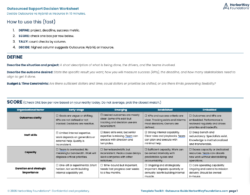
- Do we have trusted staff who can deliver to that level now? If yes, insource and use outside help for training and design.
- Do we lack the functional skills or capacity? Outsource execution to save time and avoid costly mistakes.
- Is this a one-off need or an ongoing capability? For recurring strategic work, consider a hybrid model: keep tactical execution in-house and outsource senior design, governance, or specialty services.
When is drop‑in agency support the right option?
Drop-in agency support is particularly useful when teams encounter moments of transition, growth, or complexity.
Examples include:
- Fresh eyes on priorities: If your team is stuck on prioritization or strategy, bring in external experts to quickly assess, recommend, and model implementation.
- Skill gaps: No experience with media relations, digital fundraising, or systems integration? Outsource specialists to help or even support hiring so you don’t repeat the learning curve internally.
- Workflow and playbook design: If you have capable teams but lack cohesive workflows, hire experts to design scalable systems and governance that align reach and messaging across channels.
How HWF approaches drop‑in agency support
We meet you where you are. If you have media teams and coordinators, we focus on designing workflows, templates, and governance to scale their impact. If you need execution, we run campaigns, manage communications, and ensure strategies are implemented with fidelity. Our goal is always the same: to leave internal teams stronger, not dependent.
Is outsourced drop-in agency support your best option?
If you’re evaluating whether outsourced drop-in agency support could help your organization move forward, a short conversation can clarify options. Together, we can assess your current needs and determine whether a drop-in engagement is the right fit.
About HarborWay Foundations
HarborWay Foundations partners with mission-driven organizations to design strategy, communications, and operational systems that scale impact. We offer flexible, senior-level drop‑in support, from strategic design and media to playbooks and implementation, tailored to nonprofit constraints and goals.
The post What are my options for outsourced drop‑in agency support? appeared first on Harborway Foundations.
]]>The post The New Search: How AI Overviews and Chatbots Are Changing How People Discover Nonprofits appeared first on Harborway Foundations.
]]>Today, more searchers receive answers directly on the results page through AI Overviews, rather than clicking into individual websites. Donors and partners rely less on sifting through pages of search results and more on instant, AI-powered responses from Large Language Models (LLMs) such as ChatGPT, Google Gemini, and Perplexity.
What Are AI Overviews and LLMs?
AI Overviews are generative-AI summaries placed above Google Search results. They draw from Google’s indexed web pages and deliver a compact answer with relevant links. (1)
LLMs operate via what’s called Retrieval-Augmented Generation (RAG). This approach retrieves live web data from websites, articles, research reports, and even community platforms like Reddit or Quora to craft natural, human-like responses. (2)
These technologies now surface nonprofits not just based on keywords and backlinks, but on transparency, quality of storytelling, and clarity of mission.
Put simply:
- AI Overviews summarize Google-indexed sources.
- LLMs/chatbots blend live web data and learned context to generate natural language answers.
3 Reasons Why the Age of AI Search Matters
- Visibility Without Clicks: AI Overviews and LLMs summarize information without requiring a click, so your website may capture fewer direct visits. Visibility now depends on the strength of your story and the clarity of your impact, not just keywords and links.
- Trust Begins Before the Visit: Searchers form judgments based on what AI tools say about you before they ever reach your homepage. Algorithms highlight organizations that show authentic outcomes, clear missions, and active engagement.
- Consistency Builds Credibility: Inconsistent or outdated public messaging can result in missed opportunities for discovery in AI-generated overviews. Clear messaging, transparent impact data, and mission-driven storytelling allows nonprofits to shape how they appear in AI-powered search results.
Where does the Opportunity Lie?
This shift in AI-driven search offers nonprofit organizations a chance to shape how their missions are understood and trusted. The opportunity lies in clear, consistent messaging, transparent impact data, and authentic, mission-driven storytelling.
When you back up your claims and describe them in everyday language, AI is more likely to feature your work. Early adopters who refine their content and maintain consistent public profiles will earn trust and visibility. By leading with clarity and transparency, nonprofits can define how their stories show up in this new landscape of AI-powered discovery.
Practical Steps to Prepare
Run HarborWay Foundations’ four-step visibility audit to understand your organization’s digital footprint.
- Search five to 10 questions a typical donor, volunteer, or service recipient might ask about your mission.
- Check if your organization appears in AI Overviews or LLM/chatbot answers. Document what you do or do not find. Pay attention to which competitors or market dominators surface in the answers and document the source content cited.
- Review your findings and identify what needs improvement. If you already have relevant pages, assess whether your content clarity or impact framing needs refinement
- Create a 6–12-month plan to improve how your mission appears across these emerging discovery channels.
If you want to better understand how your organization stacks up, HarborWay Foundations can help. Together, we’ll build a strategy to stay visible in the age of AI discovery.
The post The New Search: How AI Overviews and Chatbots Are Changing How People Discover Nonprofits appeared first on Harborway Foundations.
]]>The post Marketing Isn’t a Dirty Word Series: From Segmentation to Smarter Channels appeared first on Harborway Foundations.
]]>Why Segmentation Matters for Nonprofits
Nonprofits serve diverse audiences, each motivated by different aspects of your mission:
- Families respond to programs for kids.
- Volunteers respond to opportunities to contribute their time and skills.
- Funders respond to impact metrics.
When everyone gets the same generic message, nobody feels seen. Personalized outreach builds loyalty and retention. Research shows that personalized campaigns can increase conversion and engagement rates by 30 to 40 percent, which means your audience is far more likely to stick with you.
Smarter Channels, Smarter Reach
Marketing is not about shouting everywhere. It is about showing up where your audience already listens. The right channel ensures your message lands and inspires action:
- Social media for quick actions, like signing up for an event or sharing a campaign.
- Email for deeper storytelling and connecting supporters to the impact of their contributions.
- Events for building relationships, trust, and long-term engagement.
The right channel with the right message builds stronger connections, reinforces trust, and increases participation in programs, campaigns, and initiatives.
A Simple Framework
Think of it as: Segment → Tailor → Deliver → Measure.
- Segment your audience by interest, role, or connection to your mission.
- Tailor the message to what they care about.
- Deliver it in the channel they use.
- Measure results so you can refine your approach for even greater impact.
This framework ensures your communications are intentional, targeted, and more likely to produce meaningful action.
How This Ties to CTAs
Segmentation and channel strategy amplify your CTA. Without them, even the best CTA gets lost. With them, it lands with precision, inspiring your audience to take the next step and drive real impact.
Wrapping It Up: Turning Segmentation into Lasting Engagement
Segmentation and smart channel use aren’t just marketing tactics; they’re tools to keep audiences engaged and committed. When your audience receives the right message at the right time, they feel seen, understood, and empowered to act. Together, these strategies turn communication into community.
Looking to reach the right people in the right way? HarborWay Foundations can help you design smart strategies that connect and keep audiences engaged.
Missed earlier blogs? Catch Part 1 on why marketing is not a dirty word, Part 2 on sustainability, and Part 3 on the power of the call to action.
The post Marketing Isn’t a Dirty Word Series: From Segmentation to Smarter Channels appeared first on Harborway Foundations.
]]>The post Marketing Isn’t a Dirty Word Series: The Power of the Call to Action appeared first on Harborway Foundations.
]]>Why CTAs Are Critical for Nonprofit Engagement
Nonprofits rely on action: giving, volunteering, showing up, spreading the word. But action rarely happens by accident. Without a CTA, people may care deeply and still do nothing. With a clear, confident CTA, they know exactly how to help, and they’re far more likely to follow through.
Knowing why CTAs matter is one thing; creating them effectively requires an understanding of what makes them strong.
Key Qualities of a Strong Nonprofit CTA
A few key qualities make a CTA strong, effective, and capable of turning support into real impact. Here’s what that looks like:
- Simple and specific: “Donate $25 today.”
- Consistent across channels so there is no confusion.
- Values-aligned so people know their action matters.
- Urgent but authentic, sparking momentum without pressure.
Nonprofit CTA Examples in Action
Here’s how strong CTAs play out in the real world, inspiring supporters to take meaningful steps.
Rock the Vote became a cultural force because it told people: register and vote. Food banks boost volunteer numbers when they add a clear sign-up button. Membership organizations thrive when they use CTAs like: “Join today as a sustaining member and unlock programs for your community.”
Wrapping It Up: Turning Inspiration into Action with CTAs
A strong message can move hearts, but only a strong CTA moves people to act. It closes the gap between awareness and impact, turning support into something measurable: meals served, voters registered, doors opened, futures changed.
Nonprofits can’t afford to leave that power on the table. When you give people a clear path to help, they’re far more likely to take it.
Ready to turn inspiration into action? HarborWay Foundations can help you build campaigns where every message leads to movement.
Next in this series: how segmentation and channel choices sharpen your CTAs and keep audiences engaged. Missed our previous posts? Check out Part 1 to read why nonprofits need marketing more than ever, and Part 2 for what nonprofit sustainability really means.
The post Marketing Isn’t a Dirty Word Series: The Power of the Call to Action appeared first on Harborway Foundations.
]]>The post Marketing Isn’t a Dirty Word: Why Nonprofits Need It More Than Ever appeared first on Harborway Foundations.
]]>Communications: The Fuel Behind Nonprofit Sustainability
We toss “sustainability” around often, and people usually think of the environment. For nonprofits, sustainability runs deeper. It is about creating a steady ecosystem: donors who keep showing up, volunteers who return year after year, funders who see your impact and want to invest further, and communities that amplify your work.
Communications, the way you tell your story and invite people in, is the fuel.
Why Marketing Gets a Bad Rap
The word makes some leaders cringe. It feels commercial, tied to “sell, sell, sell.” But nonprofits already do marketing. They just call it communications. Corporations might label an email campaign as marketing. Nonprofits might label the same thing communications. The tools are the same, the labels change.
At its core, marketing is not manipulation. It is clarity and action. It is the megaphone for your story.
So let’s call it what it is: storytelling with purpose.
Strategic Communications and Marketing Together
Strategic communications help you tailor your voice to donors, volunteers, beneficiaries, and boards. Marketing turns up the volume, carrying those messages into the right channels with the right nudge. Connecting smarter, not shouting louder, is the heart of any successful nonprofit marketing strategy.
The Call to Action: Turning Inspiration into Action
The most important ingredient nonprofits miss is the call to action. Rock the Vote did not just talk about civic engagement. It said: Register. Vote. Now. Food banks that add a bright “Sign up for Saturday” button often double volunteer turnout. When people know exactly what to do next, inspiration becomes action.
Wrapping It Up: Building a Sustainable Nonprofit Ecosystem
True sustainability comes from trust-building communications amplified by a smart nonprofit marketing strategy, powered by clear calls to action. That is how movements grow.
At HarborWay Foundations, we believe nonprofits deserve the same strategic tools as the world’s biggest brands, with a mission-first heart.
Want to explore how your organization can move from message to movement? Reach out to HarborWay Foundations to start the conversation.
Coming up next in this series: a deeper dive into what sustainability really means for nonprofits and why it is not just about the planet.
The post Marketing Isn’t a Dirty Word: Why Nonprofits Need It More Than Ever appeared first on Harborway Foundations.
]]>