The post What are my options for outsourced drop‑in agency support? appeared first on Harborway Foundations.
]]>At HarborWay Foundations (HWF), we view outsourced support as a strategic lever. The goal isn’t to replace your team. It’s to strengthen execution, reduce risk, and build internal capacity.
Why outsourced support is critical for mission-driven organizations
Nonprofits face unique constraints: limited budgets, staff wearing many hats, and high stakes for public-facing communications and partnerships.
Outsourcing gives you:
- Focus: internal staff stay centered on core mission work
- Expertise on demand: bringing in senior experience for campaigns, planning, or complex initiatives
- Sustainable systems: creating workflows, playbooks, and governance that remain useful after engagement ends
- Consistency: maintaining clear messaging across public and internal communications
Start with outcomes. Define what success looks like: KPI targets, timeline, and the level of stakeholder coordination required.
Then ask:
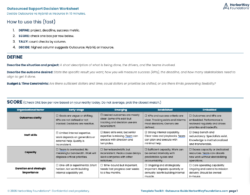
- Do we have trusted staff who can deliver to that level now? If yes, insource and use outside help for training and design.
- Do we lack the functional skills or capacity? Outsource execution to save time and avoid costly mistakes.
- Is this a one-off need or an ongoing capability? For recurring strategic work, consider a hybrid model: keep tactical execution in-house and outsource senior design, governance, or specialty services.
When is drop‑in agency support the right option?
Drop-in agency support is particularly useful when teams encounter moments of transition, growth, or complexity.
Examples include:
- Fresh eyes on priorities: If your team is stuck on prioritization or strategy, bring in external experts to quickly assess, recommend, and model implementation.
- Skill gaps: No experience with media relations, digital fundraising, or systems integration? Outsource specialists to help or even support hiring so you don’t repeat the learning curve internally.
- Workflow and playbook design: If you have capable teams but lack cohesive workflows, hire experts to design scalable systems and governance that align reach and messaging across channels.
How HWF approaches drop‑in agency support
We meet you where you are. If you have media teams and coordinators, we focus on designing workflows, templates, and governance to scale their impact. If you need execution, we run campaigns, manage communications, and ensure strategies are implemented with fidelity. Our goal is always the same: to leave internal teams stronger, not dependent.
Is outsourced drop-in agency support your best option?
If you’re evaluating whether outsourced drop-in agency support could help your organization move forward, a short conversation can clarify options. Together, we can assess your current needs and determine whether a drop-in engagement is the right fit.
About HarborWay Foundations
HarborWay Foundations partners with mission-driven organizations to design strategy, communications, and operational systems that scale impact. We offer flexible, senior-level drop‑in support, from strategic design and media to playbooks and implementation, tailored to nonprofit constraints and goals.
The post What are my options for outsourced drop‑in agency support? appeared first on Harborway Foundations.
]]>The post The New Search: How AI Overviews and Chatbots Are Changing How People Discover Nonprofits appeared first on Harborway Foundations.
]]>Today, more searchers receive answers directly on the results page through AI Overviews, rather than clicking into individual websites. Donors and partners rely less on sifting through pages of search results and more on instant, AI-powered responses from Large Language Models (LLMs) such as ChatGPT, Google Gemini, and Perplexity.
What Are AI Overviews and LLMs?
AI Overviews are generative-AI summaries placed above Google Search results. They draw from Google’s indexed web pages and deliver a compact answer with relevant links. (1)
LLMs operate via what’s called Retrieval-Augmented Generation (RAG). This approach retrieves live web data from websites, articles, research reports, and even community platforms like Reddit or Quora to craft natural, human-like responses. (2)
These technologies now surface nonprofits not just based on keywords and backlinks, but on transparency, quality of storytelling, and clarity of mission.
Put simply:
- AI Overviews summarize Google-indexed sources.
- LLMs/chatbots blend live web data and learned context to generate natural language answers.
3 Reasons Why the Age of AI Search Matters
- Visibility Without Clicks: AI Overviews and LLMs summarize information without requiring a click, so your website may capture fewer direct visits. Visibility now depends on the strength of your story and the clarity of your impact, not just keywords and links.
- Trust Begins Before the Visit: Searchers form judgments based on what AI tools say about you before they ever reach your homepage. Algorithms highlight organizations that show authentic outcomes, clear missions, and active engagement.
- Consistency Builds Credibility: Inconsistent or outdated public messaging can result in missed opportunities for discovery in AI-generated overviews. Clear messaging, transparent impact data, and mission-driven storytelling allows nonprofits to shape how they appear in AI-powered search results.
Where does the Opportunity Lie?
This shift in AI-driven search offers nonprofit organizations a chance to shape how their missions are understood and trusted. The opportunity lies in clear, consistent messaging, transparent impact data, and authentic, mission-driven storytelling.
When you back up your claims and describe them in everyday language, AI is more likely to feature your work. Early adopters who refine their content and maintain consistent public profiles will earn trust and visibility. By leading with clarity and transparency, nonprofits can define how their stories show up in this new landscape of AI-powered discovery.
Practical Steps to Prepare
Run HarborWay Foundations’ four-step visibility audit to understand your organization’s digital footprint.
- Search five to 10 questions a typical donor, volunteer, or service recipient might ask about your mission.
- Check if your organization appears in AI Overviews or LLM/chatbot answers. Document what you do or do not find. Pay attention to which competitors or market dominators surface in the answers and document the source content cited.
- Review your findings and identify what needs improvement. If you already have relevant pages, assess whether your content clarity or impact framing needs refinement
- Create a 6–12-month plan to improve how your mission appears across these emerging discovery channels.
If you want to better understand how your organization stacks up, HarborWay Foundations can help. Together, we’ll build a strategy to stay visible in the age of AI discovery.
The post The New Search: How AI Overviews and Chatbots Are Changing How People Discover Nonprofits appeared first on Harborway Foundations.
]]>The post Leading with Equity: How Organizations Are Making AI Inclusive and What You Can Learn appeared first on Harborway Foundations.
]]>
Together, these conversations point to a simple truth. AI reflects the choices, values, and perspectives of the people who build it. And when those perspectives aren’t diverse, the technology isn’t either. Left unchecked, AI can quietly reinforce inequities, undermine trust, and work against the very missions our organizations are trying to advance.
But here’s the good news: many organizations are already showing what’s possible when equity in AI comes first. In this post, we highlight real-world examples of organizations leading with equity and share lessons mission-driven leaders can apply right now.
Why Equity in AI Matters for Leaders
AI systems that overlook diversity or amplify bias can damage reputations, erode audience trust, and reinforce systemic inequities. For mission-driven leaders, this is both a technical challenge and a strategic one.
Equity in AI aligns with organizational purpose, ensuring that the tools we use serve all communities fairly, respect cultural contexts, and advance positive social outcomes. By prioritizing inclusive AI, leaders have an opportunity to shape technology that reflects their values and strengthens trust with the people they serve.
Real-World Examples of Equity in AI
Latimer.ai: Inclusive Training Data
Latimer.ai is a standout example of integrating equity from the ground up. Their large language model (LLM) is trained using input from underrepresented communities including folk tales and oral histories from around the world, ensuring that the AI understands diverse perspectives.
Through partnerships with universities and community organizations, Latimer.ai incorporates cultural nuance and lived experience into its datasets, showing that inclusive training data is foundational for equitable AI outputs.
Key takeaway: AI that reflects a wide spectrum of experiences produces more balanced results that better represent a diverse audience.
AI Now Institute: Research and Policy Advocacy
The AI Now Institute examines the social implications of AI, with a focus on bias, fairness, and equity. Through rigorous research, policy recommendations, and frameworks, they guide organizations in adopting responsible AI practices.
Their work underscores that responsible AI is a social challenge, and organizations need robust, research-driven insights to make ethical decisions that genuinely advance fairness.
Key takeaway: Evidence-based research is crucial for understanding where AI falls short and shaping policies that promote equity.
Inclusive AI Foundation: Governance & Best Practices
The Inclusive AI Foundation is a nonprofit organization that works to embed ethical, inclusive practices across AI development. Their approach emphasizes structured governance, evaluation frameworks, and community engagement to ensure AI systems serve all populations fairly.
They offer workshops, consulting, assessments, and road mapping for leaders looking to implement inclusive AI in their own organizations.
Key takeaway: Governance and stakeholder engagement are essential for embedding equity into AI design and deployment.
Five Key Lessons for Mission-Driven Leaders
- Audit your AI tools and outputs: Examine datasets and model outputs for underrepresentation and bias.
- Demand cultural filters or adjustable framing: Ensure AI tools allow context-aware outputs tailored to diverse audiences.
- Prioritize values-aware AI: Understand the priorities, values, and constraints of the communities you serve.
- Partner with underrepresented communities: Co-create datasets, evaluation metrics, or prompts to ensure authentic representation.
- Measure, iterate, communicate: Track outputs for bias and inclusivity; make equity part of your organizational standard.
These practices help leaders translate abstract principles into concrete actions that make AI more inclusive.
Closing thought
AI’s cultural blind spots are real, but equity is achievable. Organizations like Latimer.ai, AI Now Institute, and Inclusive AI Foundation demonstrate how inclusive AI is possible when intentionality, research, governance, and community engagement come together.
Mission-driven leaders can learn from these examples, apply these lessons, and take proactive steps to embed equity into AI initiatives. By doing so, you not only enhance your organization’s impact but also build trust, credibility, and lasting relationships with the communities you serve.
AI has the power to amplify good, but only if we lead with equity. Let’s make inclusive AI the standard, not the exception.
The post Leading with Equity: How Organizations Are Making AI Inclusive and What You Can Learn appeared first on Harborway Foundations.
]]>The post Marketing Isn’t a Dirty Word Series: From Segmentation to Smarter Channels appeared first on Harborway Foundations.
]]>Why Segmentation Matters for Nonprofits
Nonprofits serve diverse audiences, each motivated by different aspects of your mission:
- Families respond to programs for kids.
- Volunteers respond to opportunities to contribute their time and skills.
- Funders respond to impact metrics.
When everyone gets the same generic message, nobody feels seen. Personalized outreach builds loyalty and retention. Research shows that personalized campaigns can increase conversion and engagement rates by 30 to 40 percent, which means your audience is far more likely to stick with you.
Smarter Channels, Smarter Reach
Marketing is not about shouting everywhere. It is about showing up where your audience already listens. The right channel ensures your message lands and inspires action:
- Social media for quick actions, like signing up for an event or sharing a campaign.
- Email for deeper storytelling and connecting supporters to the impact of their contributions.
- Events for building relationships, trust, and long-term engagement.
The right channel with the right message builds stronger connections, reinforces trust, and increases participation in programs, campaigns, and initiatives.
A Simple Framework
Think of it as: Segment → Tailor → Deliver → Measure.
- Segment your audience by interest, role, or connection to your mission.
- Tailor the message to what they care about.
- Deliver it in the channel they use.
- Measure results so you can refine your approach for even greater impact.
This framework ensures your communications are intentional, targeted, and more likely to produce meaningful action.
How This Ties to CTAs
Segmentation and channel strategy amplify your CTA. Without them, even the best CTA gets lost. With them, it lands with precision, inspiring your audience to take the next step and drive real impact.
Wrapping It Up: Turning Segmentation into Lasting Engagement
Segmentation and smart channel use aren’t just marketing tactics; they’re tools to keep audiences engaged and committed. When your audience receives the right message at the right time, they feel seen, understood, and empowered to act. Together, these strategies turn communication into community.
Looking to reach the right people in the right way? HarborWay Foundations can help you design smart strategies that connect and keep audiences engaged.
Missed earlier blogs? Catch Part 1 on why marketing is not a dirty word, Part 2 on sustainability, and Part 3 on the power of the call to action.
The post Marketing Isn’t a Dirty Word Series: From Segmentation to Smarter Channels appeared first on Harborway Foundations.
]]>The post Marketing Isn’t a Dirty Word Series: The Power of the Call to Action appeared first on Harborway Foundations.
]]>Why CTAs Are Critical for Nonprofit Engagement
Nonprofits rely on action: giving, volunteering, showing up, spreading the word. But action rarely happens by accident. Without a CTA, people may care deeply and still do nothing. With a clear, confident CTA, they know exactly how to help, and they’re far more likely to follow through.
Knowing why CTAs matter is one thing; creating them effectively requires an understanding of what makes them strong.
Key Qualities of a Strong Nonprofit CTA
A few key qualities make a CTA strong, effective, and capable of turning support into real impact. Here’s what that looks like:
- Simple and specific: “Donate $25 today.”
- Consistent across channels so there is no confusion.
- Values-aligned so people know their action matters.
- Urgent but authentic, sparking momentum without pressure.
Nonprofit CTA Examples in Action
Here’s how strong CTAs play out in the real world, inspiring supporters to take meaningful steps.
Rock the Vote became a cultural force because it told people: register and vote. Food banks boost volunteer numbers when they add a clear sign-up button. Membership organizations thrive when they use CTAs like: “Join today as a sustaining member and unlock programs for your community.”
Wrapping It Up: Turning Inspiration into Action with CTAs
A strong message can move hearts, but only a strong CTA moves people to act. It closes the gap between awareness and impact, turning support into something measurable: meals served, voters registered, doors opened, futures changed.
Nonprofits can’t afford to leave that power on the table. When you give people a clear path to help, they’re far more likely to take it.
Ready to turn inspiration into action? HarborWay Foundations can help you build campaigns where every message leads to movement.
Next in this series: how segmentation and channel choices sharpen your CTAs and keep audiences engaged. Missed our previous posts? Check out Part 1 to read why nonprofits need marketing more than ever, and Part 2 for what nonprofit sustainability really means.
The post Marketing Isn’t a Dirty Word Series: The Power of the Call to Action appeared first on Harborway Foundations.
]]>The post Marketing Isn’t a Dirty Word Series: What Sustainability Really Means for Nonprofits appeared first on Harborway Foundations.
]]>Five Pillars of Nonprofit Sustainability
That ecosystem is made up of five key pillars:
- Donors who keep showing up, not just one-time gifts but steady commitment.
- Volunteers who return because they feel valued and part of something.
- Members who belong, not just a mailing list but a movement.
- Funders who double down because your impact is undeniable.
- Communities who amplify your work and spread your story.
Why Nonprofit Sustainability Matters
Think of it as infrastructure. If you only chase dollars or headlines, you burn out. Sustainable organizations grow impact without running dry, because each part of the ecosystem supports the others. When one piece is weak or missing, programs falter, engagement drops, and your mission struggles to move forward.
The Role of Communications and Marketing
Nonprofit sustainability depends on trust, and trust comes from consistent storytelling. Communications keep your audiences aligned. Marketing amplifies that story, expanding your reach and strengthening the ecosystem that fuels your work.
When your messaging is clear and purposeful, supporters stay engaged, new audiences are drawn in, and the entire nonprofit ecosystem grows stronger.
Wrapping It Up: From Survival to Movement
Sustainability is not survival. It is momentum. It’s the steady network of donors, volunteers, funders, members, and communities working together to keep your mission thriving. When every part of your ecosystem is supported and amplified through clear storytelling and smart marketing, your nonprofit grows, inspires, and becomes a movement.
If you want to sharpen your sustainability strategy, HarborWay Foundations can help you align communications and marketing so your mission keeps moving forward.
Next up in this series: the single most powerful ingredient in sustainability, the call to action. Check out Part 1 to see why nonprofits need marketing more than ever.
The post Marketing Isn’t a Dirty Word Series: What Sustainability Really Means for Nonprofits appeared first on Harborway Foundations.
]]>The post Marketing Isn’t a Dirty Word: Why Nonprofits Need It More Than Ever appeared first on Harborway Foundations.
]]>Communications: The Fuel Behind Nonprofit Sustainability
We toss “sustainability” around often, and people usually think of the environment. For nonprofits, sustainability runs deeper. It is about creating a steady ecosystem: donors who keep showing up, volunteers who return year after year, funders who see your impact and want to invest further, and communities that amplify your work.
Communications, the way you tell your story and invite people in, is the fuel.
Why Marketing Gets a Bad Rap
The word makes some leaders cringe. It feels commercial, tied to “sell, sell, sell.” But nonprofits already do marketing. They just call it communications. Corporations might label an email campaign as marketing. Nonprofits might label the same thing communications. The tools are the same, the labels change.
At its core, marketing is not manipulation. It is clarity and action. It is the megaphone for your story.
So let’s call it what it is: storytelling with purpose.
Strategic Communications and Marketing Together
Strategic communications help you tailor your voice to donors, volunteers, beneficiaries, and boards. Marketing turns up the volume, carrying those messages into the right channels with the right nudge. Connecting smarter, not shouting louder, is the heart of any successful nonprofit marketing strategy.
The Call to Action: Turning Inspiration into Action
The most important ingredient nonprofits miss is the call to action. Rock the Vote did not just talk about civic engagement. It said: Register. Vote. Now. Food banks that add a bright “Sign up for Saturday” button often double volunteer turnout. When people know exactly what to do next, inspiration becomes action.
Wrapping It Up: Building a Sustainable Nonprofit Ecosystem
True sustainability comes from trust-building communications amplified by a smart nonprofit marketing strategy, powered by clear calls to action. That is how movements grow.
At HarborWay Foundations, we believe nonprofits deserve the same strategic tools as the world’s biggest brands, with a mission-first heart.
Want to explore how your organization can move from message to movement? Reach out to HarborWay Foundations to start the conversation.
Coming up next in this series: a deeper dive into what sustainability really means for nonprofits and why it is not just about the planet.
The post Marketing Isn’t a Dirty Word: Why Nonprofits Need It More Than Ever appeared first on Harborway Foundations.
]]>The post Inclusive AI Leadership: Key Questions Leaders Should Ask About Equity and Bias appeared first on Harborway Foundations.
]]>The answer is not to learn how to code. Leaders do not need to become technologists. But they do need to hold their tech teams accountable. The most powerful way to start is by asking sharper questions.
Why inclusive AI leadership matters
AI is already shaping how we teach, treat patients, respond to climate change, and support communities. The tools you choose now will shape the path your work takes for years to come.
But this goes beyond simply checking a compliance box. For truly inclusive AI, equity should be embedded into strategy, design, and governance. By making equity and inclusion a core consideration, leaders ensure AI tools reflect the diversity of the communities they serve.
Failing to do so risks defaulting to solutions designed for the most visible populations, leaving gaps in access, fairness, and trust. Inclusive leadership ensures that technology is accountable, representative, and aligned with organizational values.
Six questions every leader should ask about AI equity and bias
- Whose voices trained this model? Does the data reflect a wide range of people across regions, incomes, industries, and experiences? Or just English-speaking, affluent ones?
- How does the model handle cultural variation? Can it shift how it responds depending on context, from rural towns to major metropolitan areas?
- Is there a default worldview built in? If so, has it been acknowledged and balanced? A system that assumes everyone has access to the same education, technology, or financial resources is not neutral.
- What languages and dialects are supported? Does the tool capture nuance, from regional dialects and multilingual phrasing to hybrid forms like Spanglish or local vernacular?
- How is fairness measured? What audits are you running, and do they check for equity across diverse populations, not just the majority?
- Who tested the system before rollout? Did the process include input from a range of users and communities, or mostly technical experts and insiders?
Real-world examples of AI bias across industries
- Education: A tool tuned to suburban schools might collapse in a rural district with patchy internet.
- Healthcare: A digital assistant may provide advice that fits city hospitals but ignores the long drives and limited options in rural America.
- Climate: AI that misses Indigenous ecological knowledge will overlook proven practices, from controlled burns to water management.
The leadership opportunity: integrating equity into mission
Across industries, conversations about responsible and equitable AI are gaining traction. The next step is turning those principles into everyday leadership.
This is about reframing AI equity as part of the mission, not an optional add-on. Asking these questions puts inclusivity on the same list as equity in funding or representation in leadership.
The upside is trust. People notice when tools reflect their lives. Leaders who demand culturally inclusive AI will stand apart as authentic, responsive, and credible.
Closing thoughts: building trust through inclusive AI
AI’s cultural bias is not permanent. Leaders who ask sharper questions now will shape systems that reflect all of humanity, not just the loudest slice.
In the next part of this series, we will highlight organizations already pushing for equity in AI and what others can learn from their example.
The post Inclusive AI Leadership: Key Questions Leaders Should Ask About Equity and Bias appeared first on Harborway Foundations.
]]>The post Cultural Bias in AI: Why Leaders Need to Ask Which Humans It Reflects appeared first on Harborway Foundations.
]]>But here is the real question: which humans?
A Harvard study (Henrich et al., 2023) revealed cultural bias in AI, showing that large language models (LLMs) mostly mirror the mindset of people from Western, Educated, Industrialized, Rich, and Democratic (WEIRD) societies. That is the shorthand researchers use for the populations most often studied in psychology and social science. In practice, it means AI often sounds like it grew up in Boston or Berlin, not Bogotá or Bamako.
And sometimes, the models lean even further into this worldview than the people themselves. They can be more WEIRD than WEIRD.
For mission-driven leaders, this blind spot matters. If your work depends on AI for insights, outreach, or strategy, the technology you’re using may be leaving out entire communities.
Cultural bias in AI at home and abroad
Globally, the mismatch is obvious. Populations in Africa, South Asia, and Indigenous communities align very little with how AI “thinks.”
But this is not only a global issue. In the United States, AI’s blind spots show up in familiar ways:
- A curriculum tool built from suburban school data might not resonate in rural Oklahoma or majority-minority districts in Houston.
- A healthcare assistant trained on urban hospital systems may be out of touch with the realities of rural clinics or community health workers.
- A workforce app that assumes everyone has credit cards, stable internet, and four-year degrees will miss low-income families who live in a different reality.
AI reflects the voices that dominate online. That means it tilts toward urban, affluent, English-speaking communities and misses those less represented in digital spaces.
And that’s not just hearsay; multiple studies have proven these gaps.
For example, Stanford researchers document how major LLMs are trained predominantly on English language data, leaving many languages and cultural contexts under-represented (Stanford HAI, 2025).
Another analysis found disparities in the accuracy of image geolocation estimation across different regions, with a tendency for AI tools to predict higher-income locations more often (Salgado Uribe, Bosch, & Chenal, 2024).
With mounting evidence of these biases, it’s important to assess the impact on our own AI-powered initiatives.
Why inclusive AI matters for leaders
Mission-driven work depends on connecting with people where they are. And if your audience doesn’t align with the demographics that LLMs are trained on, you run the risk of undermining your company’s impact, reputation, and funding.
Here’s how that might look:
- Excluding key voices: Campaigns unintentionally overlook rural, multilingual, or underrepresented communities.
- Missing the mark: Messaging comes across as out of touch, weakening trust with your target audience.
- Missed opportunities: Important insights get lost, leading to lower fundraising, adoption, and customer loyalty.
This is not just a technology problem; it’s a leadership challenge. But one that can improve with the right changes.
What more inclusive AI could look like
Right now, AI is a sponge. It soaks up what is most available online, which skews the results. A more inclusive approach would look different:
- Diverse data: Training should include stories, conversations, and materials from underrepresented communities, not just Silicon Valley blogs and English-language media, so the model reflects a wider range of lived experiences.
- Cultural filters: Imagine an “equity mode” setting, where leaders can shift how a model frames ideas depending on the audience. While some tools offer surface-level tone adjustments, they are not yet sophisticated enough to capture cultural norms, values, and context-specific subtleties.
- Values awareness: AI needs to understand not just what people say, but why they say it. That could be loyalty to family, faith traditions, or the need to stretch every dollar. This understanding enables more authentic, relevant, and responsible engagement.
The opportunity for leaders
Cultural bias is a risk of using AI tools, but it also offers a chance to lead.
- Spotting biases early helps leaders avoid costly missteps and apply thoughtful scrutiny when using LLMs.
- Audiences notice when companies go beyond AI defaults. Tailored messaging makes communities feel understood and sets your brand apart.
- Leading with inclusivity in AI as part of equity work raises the standard for trust across industries and communities.
Closing thought
Cultural bias in AI is real, but it is not unavoidable. The leaders who see it and demand more will be the ones shaping technology that bridges communities instead of excluding them.
Spotting these blind spots is the first step. In the next post, we’ll share six practical questions you can ask your tech teams and partners to hold them accountable, ensuring AI truly reflects the communities you serve.
The post Cultural Bias in AI: Why Leaders Need to Ask Which Humans It Reflects appeared first on Harborway Foundations.
]]>The post Meet the Founder: Javier Encinas, HarborWay Foundations™ appeared first on Harborway Foundations.
]]>Why did you start HarborWay Foundations?
HarborWay Foundations (HWF) was born from a mix of hard knocks, hard lessons, and one very real wake-up call. After decades chasing growth charts and EBITDA lines, I realized too many organizations were sprinting toward “success” without stopping to ask “why.” Then a serious accident in 2022 hit the brakes on everything. Recovery has a way of stripping away the noise. It reminded me that growth only matters if you still recognize yourself in it. HarborWay exists to help mission-driven leaders grow on purpose, not just on paper.
What kind of work did you do before launching HWF?
I’ve been in the game for over twenty years: marketing, brand strategy, executive leadership. Telecom, education, consumer goods, tech, you name it. I’ve led national campaigns, wrangled big budgets, and herded cross-functional cats. Later, private equity taught me the mechanics of scale, and how easy it is to lose your soul in the process. Those experiences gave me the playbook and the conscience: grow big, but deliver more than a traditional “bottom line.”
What makes HWF different from other marketing consultancies?
We don’t start with content; we start with clarity. Most firms crank out campaigns. We build marketing and communications engines that connect vision to measurable outcomes. HWF helps mission-driven organizations (for-profit and nonprofit) align their message, metrics, and momentum so they can do well and do good, without the fluff or PowerPoint bingo.
How did your background influence your approach to business?
I grew up in a big, working-class Mexican American family in southern Arizona. My dad could fix anything with duct tape and stubbornness. My mom made curiosity a daily habit. That combo became my first lesson in sustainability and creative problem-solving, long before I had a title for it. They taught me that real strategy isn’t written in decks; it’s built in the doing.
Who does HWF work with today?
We work with conscious investors, mission-driven leaders, and nonprofits that want to stop “meaning well” and start moving the needle. Our clients already know what they stand for. They just need the strategy and structure to make it count.
What’s one belief that guides how you lead and collaborate?
That business is the most scalable force for good we’ve got. Growth and good aren’t opposites: they’re dance partners. You just have to pick the right rhythm.
What’s next for HWF?
We’re helping more organizations design sustainable growth models that reflect who they are, not who the market tells them to be. The future belongs to the mission-driven, and we plan to be a force behind it.
Final thought?
Sure. Life handed me a plot twist, and I decided to turn it into a playbook.
If HWF helps one more mission-driven leader build something that shakes things up for good, then every twist was worth it.
The post Meet the Founder: Javier Encinas, HarborWay Foundations™ appeared first on Harborway Foundations.
]]>